
Endoscopic spine surgery is a minimally invasive procedure used to treat problems in the spine, such as herniated discs or spinal stenosis. Here’s a simple breakdown:
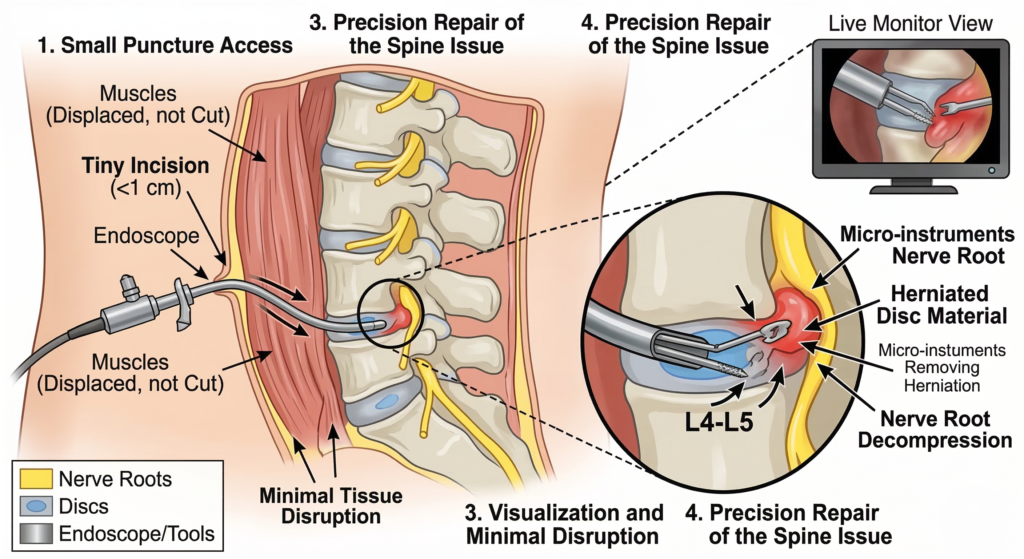
Small Incision – Instead of making a large cut like in traditional spine surgery, the surgeon makes a tiny incision, usually less than a centimeter.
Camera-Based Surgery – A small camera called an endoscope is inserted through the incision. This lets the surgeon see the spine on a monitor and guide tiny instruments to fix the problem.
Faster Recovery – Because the incision is small and muscles are not cut as much, patients usually experience less pain, lower risk of complications, and quicker recovery compared to traditional open surgery. Many people can return to normal activities much sooner.
In short, endoscopic spine surgery is like using a tiny camera and tools through a small doorway to fix the spine, making the process gentler on the body.
Endoscopic Spine Surgery in Wakad, PCMC& Pune with Dr. Nirmal Patil
Dr. Nirmal Patil – Endoscopic Spine Specialist is a minimally invasive spine surgeon based in Wakad, PCMC (Pune, Maharashtra, India). He specializes in endoscopic spine surgery and advanced minimally invasive techniques at Precision Ortho Spine & Rehab Clinic and associated clinics in the Pune region.
What Is Endoscopic Spine Surgery?
Endoscopic spine surgery is a camera‑guided, minimally invasive procedure for diagnosing and treating spine conditions through a small incision. Unlike traditional open surgery, it uses a tiny tube and endoscope (a small camera) to access the spine, allowing surgeons to see the affected area on a monitor and fix the problem with precision.
- Small Incision — Only a tiny cut is needed, which means less muscle and tissue disruption.
- Camera‑Based Surgery — A slender endoscope with a camera lets the surgeon visualize the spine clearly on a screen.
- Faster Recovery — Because it’s less invasive than open surgery, patients usually experience less pain, shorter hospital stays, and quicker return to normal activities.
Conditions Treated with Endoscopic Spine Surgery
Endoscopic spine surgery with Dr. Nirmal Patil can treat many spine problems that cause pain and nerve compression, including:
- Herniated Disc – Pain from a slipped or bulging spinal disc that presses on nearby nerves.
- Sciatica – Pain, numbness, or tingling along the sciatic nerve in the lower back and leg.
- Spinal Stenosis – Narrowing of the spinal canal that compresses the spinal cord or nerves.
- Degenerative Disc Disease – Age‑related wear and tear of spinal discs causing chronic back pain.
- Spondylolisthesis – One vertebra slipping forward over another, leading to pain or nerve issues.
- Facet Joint Pain – Pain from small joints in the spine due to arthritis or injury.
Benefits of the Procedure
Patients choose endoscopic spine surgery in the Pune‑Chinchwad area because it typically offers:
✔️ Smaller surgical cuts → less pain and smaller scars
✔️ Camera guidance → precise treatment for nerve compression
✔️ Faster recovery → many patients return to work and normal life sooner than with traditional surgery
Why Choose Dr. Nirmal Patil in Wakad/ Pune
- Dr. Patil is a consultant orthopedic endoscopic and minimally invasive spine surgeon with specialized training in spinal endoscopic and minimally invasive spine surgery.
- He practices in Wakad, Pimpri‑Chinchwad, and Pune, serving patients with back pain, neck pain, radiculopathy, and nerve‑related symptoms.
- His approach emphasizes precision, modern imaging, and tailored care for each patient’s condition.
Who Needs Endoscopic Spine Surgery?
You may need endoscopic spine surgery if you are experiencing persistent spine or nerve-related problems that affect your daily life. Common reasons include:
- Severe leg or back pain – Pain from a Herniated Disc, Sciatica, or Spinal Stenosis that does not improve with medications or injections.
- Numbness or tingling – Persistent tingling, weakness, or “pins and needles” sensations in your legs or feet.
- Failed physiotherapy or conservative treatments – If exercises, medications, or injections haven’t relieved your pain.
- Difficulty walking or standing – Trouble with mobility due to nerve compression, weakness, or pain.
- Recurring back problems – Chronic or recurring spine issues that affect your quality of life.
Dr. Nirmal Patil, Endoscopic Spine Specialist, evaluates each patient carefully to see if endoscopic surgery is suitable. Because it is minimally invasive, it can relieve nerve pressure and pain while speeding up recovery faster compared to traditional spine surgery.
Frequently Asked Questions (FAQ) – Endoscopic Spine Surgery
1. Will I need a large incision for this surgery?
No. Endoscopic spine surgery uses a tiny incision (usually less than a centimeter). A small camera and surgical tools are inserted through this incision, minimizing tissue damage and scarring.
2. How long will I stay in the hospital?
Most patients have a short hospital stay, often just 1 day, depending on the procedure and their overall health. Some may even go home the same day.
3. How soon can I walk or return to normal activities?
Because the surgery is minimally invasive, many patients can walk the same day or the next day and gradually resume daily activities within 1–2 weeks. Heavy lifting or strenuous work may take longer.
4. Is endoscopic spine surgery painful?
Patients usually experience less post-operative pain compared to traditional open spine surgery. Pain can be managed with medications and generally improves quickly.
5. How do I know if I am a candidate for this surgery?
You may be a candidate if you have severe leg or back pain, numbness, weakness, difficulty walking, or if conservative treatments like physiotherapy have failed. Dr. Nirmal Patil will evaluate your spine with imaging and clinical assessment to decide the best approach.
Benefits Over Traditional Surgery
| Traditional Surgery | Endoscopic Surgery |
| Large incision | 8 mm incision |
| 3–5 day hospital stay | Same-day discharge |
| Longer recovery | Quick recovery |
Procedure Step by Step
1️⃣ Anesthesia
The patient is given anesthesia so they do not feel pain during the procedure.
2️⃣ Small Incisions
A very small incision (around 8 mm) is made near the affected area of the spine.
3️⃣ Endoscope Insertion
A thin tube with a camera (endoscope) is inserted through the incision to clearly view the problem area.
4️⃣ Disc Removal
The surgeon carefully removes the damaged or herniated part of the disc.
5️⃣ Nerve Decompression
Pressure on the nerve is relieved, helping reduce pain, numbness, and weakness.
Recovery Timeline
Day 1 – Walking
Most patients are able to stand and start walking within a few hours after the procedure. Light walking helps improve blood circulation and reduce stiffness.
1 Week – Light Activity
After about one week, patients can usually perform light daily activities such as short walks, basic household tasks, and gentle movements. Heavy lifting and strenuous exercise should still be avoided.
3 Weeks – Return to Work
Many patients can return to work within about three weeks, especially if the job is not physically demanding. Full recovery and normal activity levels continue to improve over the following weeks.
Success Rate
Endoscopic spine surgery has a 90–95% success rate in properly selected patients. This means most patients experience significant relief from symptoms such as back pain, leg pain, numbness, and weakness after the procedure.
Because the surgery uses a small incision and a minimally invasive technique, it usually results in less tissue damage, faster recovery, and a lower risk of complications compared to traditional open spine surgery.
Dr. Nirmal Patil is highly experienced in performing endoscopic spine procedures and specializes in treating conditions such as slipped disc, sciatica, and spinal nerve compression using advanced minimally invasive techniques. With careful patient evaluation and precise surgical methods, he focuses on achieving the best possible outcomes and faster recovery for his patients.
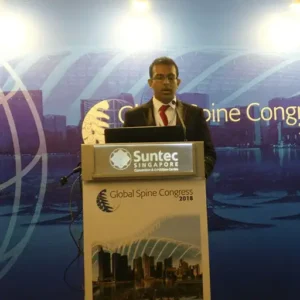
Dr. Nirmal Patil – Endoscopic Spine Surgeon
Dr. Nirmal Patil is a highly skilled Orthopaedic Spine Surgeon and Endoscopic Spine Specialist dedicated to providing advanced, minimally invasive treatment for spine disorders. He specializes in endoscopic spine surgery, a modern technique that uses very small incisions and a camera-guided system to treat spinal conditions with less pain, faster recovery, and minimal hospital stay.
Dr. Patil offers expert care for conditions such as slipped disc, sciatica, back pain, neck pain, and nerve compression, using the latest endoscopic and minimally invasive spine surgery techniques.
With a patient-focused approach and advanced surgical expertise, he aims to deliver safe, effective, and long-lasting relief from spine-related problems.
Areas of Expertise
- Endoscopic Spine Surgery
- Minimally Invasive Spine Surgery
- Slipped Disc Treatment
- Sciatica & Nerve Compression
- Cervical Spine Surgery
- Disc Replacement Surgery
- Keyhole / Tubular Spine Surgery
- Spine Deformity Treatment
Consult Dr. Nirmal Patil
📍 Dr. Nirmal Patil | Best Spine Surgeon in Wakad | Best Orthopedic Doctor, Back Pain, Neck Pain, Spine Specialist in PCMC
4th floor, MI Commercials Building, Unit 401, Vishnu Dev Nagar, Wakad, Pimpri-Chinchwad, Pune, Maharashtra 411057
📞 Call Now: +91 9168746986